














Behind every well-fitting garment is a designer who understands both the art and engineering of clothing, and Angelina Yuen has spent more than fifteen years honing that balance. Her career spans some of fashion’s most respected environments, including Kith, Oscar de la Renta, Prabal Gurung, The Row, Spectra Private Brands, and MISS Sportswear. In her current role as Men’s Technical Designer at Kith, she leads pattern grading, fittings, and technical development, while building Solzen, an independent project that reflects her long term creative ambitions. Today she sits down with us to reflect on the path that brought her here, the discipline that shapes her practice, and her evolving vision for the future of design.
Let’s kick it off with where and when you first came into this world. Do you think your country of origin has in any way shaped your vision of the world?
Being Canadian gives me a softer and more yielding point of view than as an American, but many say New York is where ambitious Canadians go. Additionally, with my Chinese heritage comes traditional views of my socioeconomic footprint, which impacts how I behave, what I value, and how I treat others. Being from a humble home, it’s hard not to feel that my career choice is frivolous, but I am proud to have made something of myself, not at the expense of others, and to be honorable to my family.
When did you decide that a career in your field was your calling? What sparked or influenced that decision? Any story behind that choice?
Both parents were busy service workers, so I was raised by my paternal grandmother, who was the only family member who could sew. My grandmother was a huge influence in my upbringing. As an infant she made dresses for me, and I take pride that I was able to make traditional Chinese dresses (Cheongsam) for her in return in my young adult years. There was a lot of pressure to be anything but an artist in my home; we raised nurses, accountants, and government workers, but none of those occupations called to me.
I often did poorly in school and only excelled in science and the arts. I picked up the skill of sewing at the age of 15 and was barely passing high school because I was skipping classes to do so. My parents wished for me to become a pharmacist as I excelled in the sciences, but while I was being expected to pursue this, I joined an at-risk youth program to take more fashion-related classes, which included screen printing, advanced sewing, and other workshops as a hobby.
By now I had already participated in two fashion shows and was a medalist for 2nd place in the Skills Canada Women’s Apparel Competition when I was 17. Eventually after high school graduation, I withdrew my university application and applied for fashion design at Seneca College in Toronto. My parents were furious and I had little support in this decision, so I worked multiple jobs while in school to keep myself in fashion school. Here I received my first degree in womenswear.
I was taken in by a Toronto factory as an apprentice, and after several years became a paid factory seamstress, being paid by the unit, and since I sew rather quickly, my hourly rate was rather high. Unfortunately, there were no design jobs in Toronto, and I already outgrew my retail job career ladder, so I financially prepared and moved myself here to New York and went back into school for two more degrees, which include Menswear and Technical Design at FIT.
What lights the spark for your creativity? Share with us what keeps you inspired and motivated, the driving forces behind your work. Any people or experiences that have shaped your unique artistic perspective or deeply influenced you?
Curiosity drives my work, and the interest in the constant moving pendulum of the human experience, how our trends and needs change and how humans adapt and create to accommodate newness. I’ve always been a very technical person; therefore, I am inspired by avant-garde patternmakers and construction-driven designers.
My grandmother is also a huge influence in my perspective of fashion. One of her teachings is to have integrity in everything I do, without being at the cost of others. Similar to the saying “treat others how you want to be treated,” she has set a very high standard of values for me. Combined with my interest in the sciences, I took on an interest in sustainable options in fashion. Several small collections I started out with applied sustainability either in construction and use of material, the type of sustainable material, regardless if recycled or circular, or even smart merchandising and being selective in my decisions to reduce waste.
I believe I am on a constant search of finding sustainable options for consumers to enjoy fashion without it being at the cost of others or the environment, and that drives me. Until I get there, I hope to continue to sharpen my reservoir of skills to be able to develop great quality and worthy product. I am confident that I will show consumers that there are indeed products of quality that are worth the investment, but also that with good fit and construction, a lower-cost item can still provide just as good styling.
How do you bring your ideas to life? Take us behind the scenes of your creative process, what’s it like for you, and how do you navigate the twists and turns of turning imagination into reality?
Bringing clothing to life is easier to me than the other lifestyle ideas or accessories I’d like to bring to life, which require skill sets and supplies outside my category. But I start by looking for something I’m missing in the market that is stylish, modest, and assists me through my day. Something that is functional and lets me get back to my day quicker, subtle in design. I look to Swedish design for inspiration, or if the idea is already fulfilled, I work my way through the idea to see if it “sticks.”
I have a home studio which has a full factory pattern-making table, rolls of fabric below, and an industrial sewing machine. I get rather excited, so I skip all the mood board building and go straight to drafting the pattern to cut and sew. I believe it is easier to flush out an idea just by doing it without overplanning with sketches. I fill in the technical flat sketches after, as construction offers opportunities to change as I’m working it out. I try to be organic and see where the project takes me; thinking on my feet is a valuable skill.
Is there a mission or a special message you’re eager to share through your work and practice? Is there any particular purpose that fuels your career?
Bringing fashion to a more sustainable space, bringing it to consumers easier without losing style or being hard to reach or intimidating, which I feel like the fashion world is today. Creating a space similar to the youth center I was in to give back to a community and rebuild a generation who loves handwork. I want to bring fashion back to be of service to the consumer, to change how we consume.
I find Patagonia’s “don’t buy our jacket” campaign very honest and honorable. My personal end goal is to be a better option for consumers. My career path are just stepping stones of places I wanted to hone my craft, to see how business is run and how different levels of product are made, to curate ideas on how I can position myself in an already saturated industry.
Looking back, what’s been a standout moment in your career so far? Any projects that you just loved working on or moments that made you incredibly proud?
I’m grateful to have had several standout moments, including winning awards for my hard work. I won a competition held by a Canadian wine company to design their Chardonnay bottle and got chosen to have it produced when I was 18. When I made my first sustainable capsule collection for my graduating thesis. To have been accepted to the FIT Menswear program that only accepts 25 applicants a year and have graduated top of my program with honors.
To have been on the team to hand sew Paris Hilton’s wedding gown at Oscar de la Renta, and to have carried the weight of The Row’s 2019 Fall collection, as when I was hired, the person who hired me quit the same day I started. To have been a mentee of the master tailor of the Hermès mansion learning about bespoke tailoring and have him offer me his position, but I decided to join Kith. Now at four years in Kith, I have ascended from assistant to full technical designer and a mentee to José Miró, who is a European designer and has also worked in many European design houses himself.
Do you have any recent, current, or upcoming projects you are excited about?
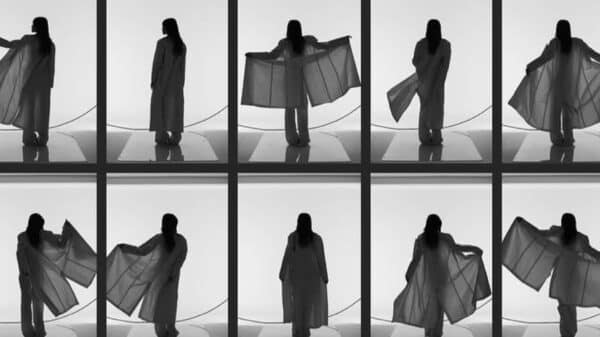
My current project is my own brand Solzen. I think after over 15 years doing fashion, I have finally gathered enough insight to start my own brand and fulfill the space I believe I am missing. Though it is not fully complete, I believe it is a great start, and to have organically designed accessories that I resonate with and for people to find the ideas refreshing is invigorating. Though the materials are not sustainable this collection, I believe how I approached merchandising and production allowed me to reduce my footprint by producing well-made and well-designed products in limited runs. I recently hosted a soft launch gallery which I was very proud of the turnout and the support I’ve received, and I believe this is only the beginning of me sharing my ideas with the world.
Reflecting back, what steps do you think were essential to achieve success in your career? Is there anything you would have done differently?
I have absolutely no regrets. If I were to tell 12-year-old me, who came from a family who lived off of hand-me-down clothes, that I would make it this far in the fashion industry, I wouldn’t have believed myself. I think I climbed very far and very high, so I don’t believe I can do anything more with the life cards I’ve been dealt. But I do wish I found courage earlier in my career to participate in even more competitions to push my limits. I find as an artist putting yourself out there is the hardest part, and I’ve spent a lot of time curating knowledge and skill. So I can only wish I had done everything even sooner, especially with launching Solzen.
As an arts and creative professional, what is the biggest career challenge you had to deal with? What helped you overcome it?
Personally, work-life balance. As a creative professional, though I work a 9–6, often times 9–9, I don’t go home and not be a creative professional, it is innately built in me. I’m a designer 24 hours of the day and I make decisions as one in my daily life. Professionally, how to make myself competitive in an already saturated and hungry market of other professionals who are better than me. But I believe everyone comes from a different starting point, so I look back often to compare myself now to where I started to stay in my lane. It is easy to compare to others, especially in New York, but I try to stay true to my vision in hopes to find like-minded individuals on my journey. It is important to remind oneself that the skills and experiences I’ve obtained belong to me in my reservoir and no one can take them away.
What sage advice would you offer aspiring individuals venturing into your field?
Of course to go all in, to do yourself the service of pushing yourself to the limits if you truly want it. To have integrity in your actions. And many successful people often say failure is when you give up, success is when you fail enough times that you fail upwards, so mindset, self-preservation, and persistence are important. Being prepared with the right skills when the time has come is also important, you can’t have the mindset but not put in the work. I feel like a lot of my success comes from doing what I need to do, and you’d be surprised what falls onto your lap when one has done enough to unlock more opportunities.