









Fashion often operates between memory and invention, drawing from the past while imagining the future. For designer Runtan Du, that space between history, mythology, and contemporary life has become fertile ground for creative exploration. Born in China and now based in New York, Du has built a practice that moves fluidly between conceptual inquiry and technical precision. He first gained international recognition in 2020 when he debuted the Spring/Summer 2021 collection for his independent fashion label, run tan du, at Shanghai Fashion Week, introducing a distinctive creative voice shaped by storytelling, mythology, and cultural reflection. Since then, he has expanded his influence across multiple facets of the industry, contributing to collections for renowned designer Prabal Gurung, collaborating with established companies including Children’s Apparel Network and Lady and Butler, and serving as a critic for both Parsons School of Design and Pratt Institute. As Co-Founder and Chief Operating Officer of DIALECTIVE, a nonprofit platform dedicated to supporting emerging designers, he has also helped create opportunities for the next generation of fashion talent. Rooted in research, history, mythology, and questions of identity, Du’s work challenges conventional boundaries between fashion, art, and cultural commentary. In this conversation with The Status Life, he reflects on the experiences that shaped his creative vision, the role of ambiguity in his practice, and why meaningful design often begins with asking questions rather than providing answers.
Questions of identity, belief systems, and cultural memory seem to run throughout your work. Looking back, where do you think that fascination began?
I was born and raised in Qingdao, China, and later moved to the US to pursue an education. Growing up between cultures fundamentally shaped how I see the world. I was exposed early to the tension between tradition and modernity, collectivism and individual expression. That duality still defines how I think about identity and belief systems today. I don’t see culture as something fixed. I see it as something negotiated, layered, and constantly evolving, which naturally feeds into how I design.
Looking back, what drew you toward fashion as a means of expression rather than another creative discipline?
I didn’t have a moment of realization where I decided fashion was my calling. It was more of a slow realization. I’ve always been drawn to history, mythology, archeology, and fashion became the medium where all of those interests could exist at once. Over time, I realized clothing could function more than aesthetics; it could act as a language, a way to ask questions about who we are and what we believe.
Where does your curiosity lead you when you’re developing new work?
My creativity is sparked by research and observation, especially human history, and the way we assign meaning to objects. I’m deeply influenced by ancient cultures, speculative futures, and moments where civilizations collapse or transform. I’m less interested in trends and more interested in why humans repeatedly return to certain symbols, silhouettes, and rituals across time.
Once a concept captures your attention, how do you bring it to life and transform it into a finished collection?
My process usually starts conceptually. I build a framework first: the narrative, the system, the question I’m trying to explore. From there, I translate those ideas into silhouette, construction, and material. It’s very iterative. I sketch, drape, prototype, discard, and rebuild. There’s a lot of tension between control and collapse in my process, and I let that tension guide the final form.
What questions or ideas have remained most important to you throughout your creative practice?
At the core of my practice is a desire to explore ambiguity, especially around identity, divinity, and gender. I’m not interested in providing answers. I want the work to exist in a space where viewers are invited to interpret, reflect, and project their own beliefs. If there’s a purpose driving my career, it’s creating work that slows people down and asks them to sit with uncertainty.
When you look back at your career so far, which experiences stand out as particularly significant?
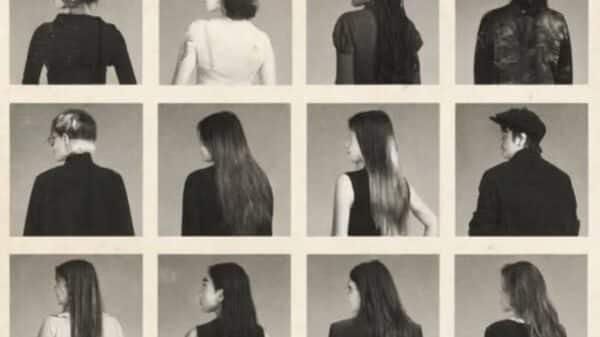
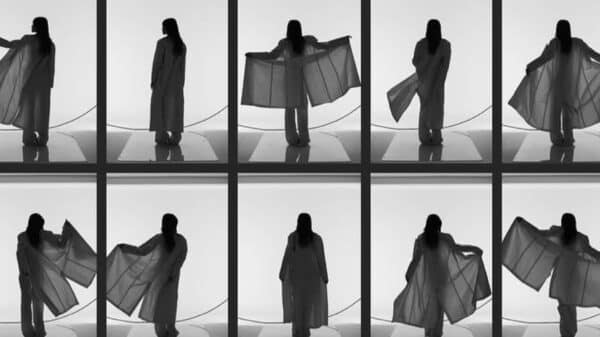
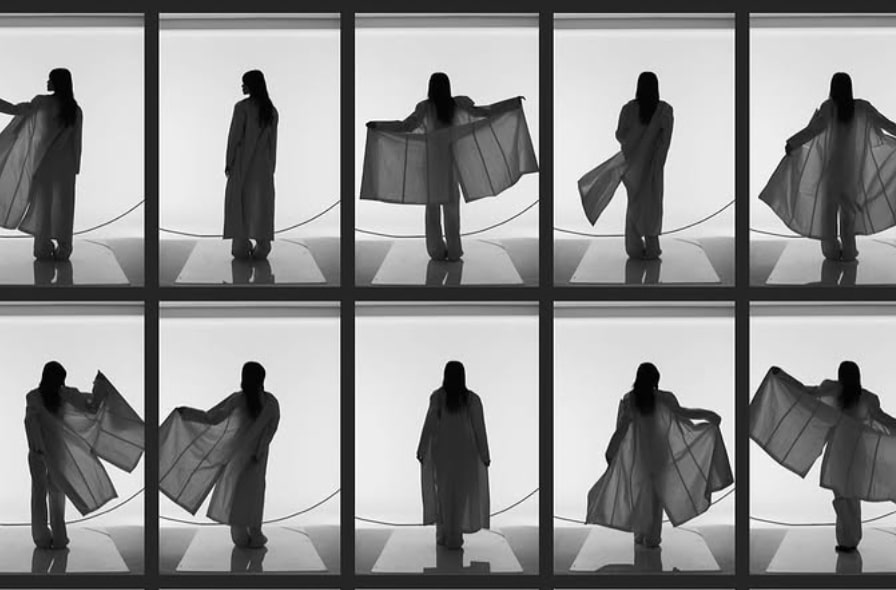
Launching my brand run tan du at Shanghai Fashion Week was a defining moment for me. It was the first time my work existed in a global context, outside of school, and it forced me to articulate my vision clearly and responsibly. More recently, my MFA thesis collection Undefined Deity felt especially meaningful. It allowed me to fully integrate years of research into a cohesive body of work that reflects who I am now as a designer.
What are you currently focused on, and what directions are you interested in exploring next?
I’m currently excited about projects that expand beyond traditional fashion formats: installations, collaborative platforms, and conceptual programming through both run tan du and DIALECTIVE. I’m interested in building spaces where fashion can exist alongside other disciplines, and where emerging creatives can engage in dialogue rather than competition. I’m also working on the first footwear collection ever of run tan du, which will be shown in 2026.
What experiences have contributed most to your development as a designer and creative leader?
Looking back, one of my greatest strengths has been problem-solving: learning how to navigate complex creative, technical, and structural challenges independently. Early in my career, I often took on everything myself, believing that solving problems alone was the most efficient way to protect my vision. While that taught me resilience and adaptability, I now recognize that I could have benefited from working more collaboratively. I’ve learned that collaboration doesn’t weaken authorship; it can expand it. If I could do anything differently, I would have trusted shared processes earlier and allowed dialogue to play a larger role in shaping the work.
What has tested you the most throughout your career?
The biggest challenge I’ve faced is navigating an industry that often prioritizes speed and visibility over depth. What helped me overcome that was committing fully to my own pace and values, even when it felt risky. Building a long-term practice requires patience and resilience.
What guidance would you share with those hoping to establish their own creative practice?
For anyone entering this field, my advice is to develop a point of view before chasing validation. Technical skill is important, but clarity of intent is what sustains a career. Learn the system, but don’t let it define you. And most importantly, create work that you would still believe in even if no one was watching.