












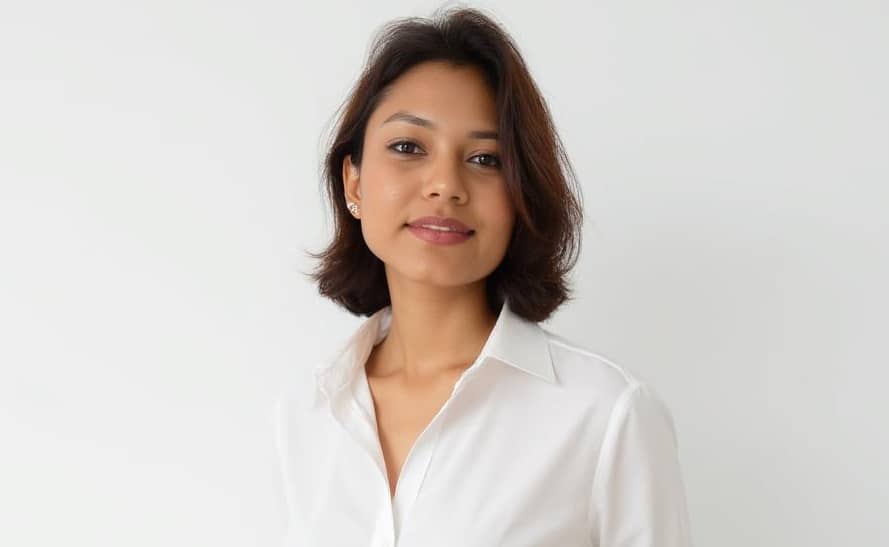
In recent years, some of the most compelling work in architecture and urban design has emerged from practitioners operating across disciplines, engaging not only with buildings, but also with public space, mobility, ecology, research, and community engagement. The work of Sagarika Nambiar reflects this evolving approach. Across projects in the United States, India, and Bahrain, her practice moves fluidly between architecture, urban design, strategic planning, and socially responsive design.
Currently working at Moore Iacofano Goltsman, one of the United States’ leading multidisciplinary planning and urban design firms, Nambiar has contributed to large-scale civic and institutional initiatives including the Redding Riverfront Specific Plan in California, the Strategic Plan and Master Facilities Plan for Sinte Gleska University on the Rosebud Indian Reservation in South Dakota, and several transit-oriented and community-centered urban planning projects throughout California. Her work focuses on the visual and strategic development of complex planning frameworks through design communication, public engagement, research synthesis, and urban analysis.
Prior to her work in the United States, Nambiar developed an interdisciplinary foundation in India through her work at The Blank Slate, the Mumbai-based architecture and urban design studio known for its climate-responsive and socially engaged approach. There, she contributed to award-winning projects including the nationally recognized Vision Sitabuldi District proposal in Nagpur, as well as educational and sensory-focused environments such as the SOPAN Shanay Autism Resource Center and the Sanjay School for Special Education. Earlier in her career, she also worked in Bahrain on high-end private villas and residential developments.
In this conversation with The Status Life, Sagarika Nambiar reflects on the evolving role of architecture and urban design, the importance of culturally grounded and community-centered planning, and the ways research, participation, and environmental thinking continue to shape her approach to the built environment.
We know every art and creative professional has a story to tell, and we’re not only looking for the glossy highlights, but the authentic experiences that shape your perspective. Let’s start from the beginning. Do you think your background influenced the way you see cities and design?
Absolutely. My background shaped almost everything about the way I think about architecture and urban design today. I was born in India, but I grew up in the Kingdom of Bahrain until the age of fifteen before moving back to Mumbai for architecture school. Those two environments were completely different.
Growing up in Bahrain, life felt very structured and comfortable. I was driven everywhere, spent time outdoors with friends after school, and appreciated the work-life balance people had there. Moving to Mumbai was a shock in many ways. I suddenly found myself commuting almost four hours a day on Mumbai’s local trains while attending Sir J.J. College of Architecture.
Experiencing Mumbai so directly made me realize how infrastructure, mobility, and public spaces shape people’s everyday experiences. It also taught me resilience and independence. Looking back, those years deeply influenced my interest in human-centered urban design.
When did architecture and urban design become your calling?
I remember one particular moment very clearly. During my first year of architecture school in 2014, I was walking through the narrow streets of Dharavi in Mumbai while studying housing typologies and informal settlements. I became fascinated by the way streets functioned not only as circulation spaces, but as extensions of people’s homes and social lives.
That experience changed the way I viewed architecture. I became interested in understanding how communities function collectively and how urban design can support social interaction, inclusivity, and everyday life.
Over time, that interest evolved through my professional experiences. At The Blank Slate in Mumbai, I worked on projects focused on tactical urbanism, public space design, and transit-oriented development research. Later, pursuing a Master of Urban Design at UC Berkeley allowed me to explore broader ideas surrounding placemaking, sustainability, and participatory planning.
What inspires your work today?
My biggest motivation comes from understanding that design has the power to improve people’s everyday lives. My goal has always been to help create cities and environments that are inclusive, resilient, and sustainable.
I’m naturally empathetic and sensitive to how communities experience spaces differently. I’m interested in understanding the challenges people face in their daily lives and how design can respond to those realities in meaningful ways.
One book that deeply influenced me early on was Everyday Urbanism by Margaret Crawford. It helped me understand that urban design is not only about monumental gestures or aesthetics. Sometimes small interventions and ordinary experiences are equally important in shaping cities.
How would you describe your design process?
At its core, I believe design should be participatory. I try to involve communities as much as possible because I believe people should have agency in shaping their own environments.
I usually begin by researching the history, growth, and evolution of a place. I want to understand the culture, stories, aspirations, and environmental systems connected to the site. To me, placemaking includes not only people, but also landscape, flora, fauna, and local identity.
One of the aspects of design I enjoy most is finding ways to support communities with tools that allow them to actively participate in planning processes. That approach is central to much of my work today.
At this stage in my career, I still consider myself a generalist. I enjoy working across different project types, whether they are Specific Plans, Streetscape Projects, Transit-Oriented Development studies, Vision Plans, or campus planning initiatives. Exploring different scales and challenges keeps me creatively energized.
Your work spans projects in India and the United States. Are there any projects that stand out to you personally?
Winning the Streets for People Challenge in India while working at The Blank Slate was definitely a defining moment for me. I served as a design lead on the proposal, and the entire team was working remotely during the pandemic. Managing coordination, communication, and deadlines during such a difficult time pushed me to grow tremendously as a designer and collaborator.
More recently, I’ve been deeply involved in projects at Moore Iacofano Goltsman (MIG), Inc. that focus on long-term civic and community planning.
One of them is the Redding Riverfront Specific Plan in California, which aims to reconnect the city of Redding and its residents to the Sacramento River through ecological restoration, mobility improvements, public space design, and community engagement. Another meaningful project has been the Strategic Plan and Master Facilities Plan for Sinte Gleska University in South Dakota, one of the first sovereign Tribal land-grant universities in the United States. That project focused on strengthening culturally responsive campus environments rooted in Lakota identity and environmental stewardship.
What excites me most about these projects is that they go beyond physical design. They involve listening, collaboration, research, and understanding how planning can support long-term community wellbeing.
What has been one of the biggest challenges in your career so far?
One of the biggest adjustments was transitioning from design school into professional practice. In school, you can explore highly conceptual ideas without always thinking about feasibility. In practice, you quickly realize that projects are shaped by budgets, regulations, politics, technical constraints, and competing public opinions.
Over time, I learned that those limitations are not necessarily obstacles, but opportunities to find smarter and more grounded solutions. The challenge is learning how to remain creative and idealistic while also working within real-world conditions.
What advice would you give young designers entering architecture and urban design today?
Don’t be afraid to enter unfamiliar spaces or speak at tables where you feel inexperienced. A lot of growth comes from stepping into environments that challenge you.
Also, never stop learning. Reach out to people in the field, ask questions, stay curious about evolving ideas and technologies, and remain open to different perspectives.
Most importantly, don’t lose your own voice in the process. Your experiences, observations, and perspective are valuable, especially in a field that is ultimately about shaping environments for people and communities.