

















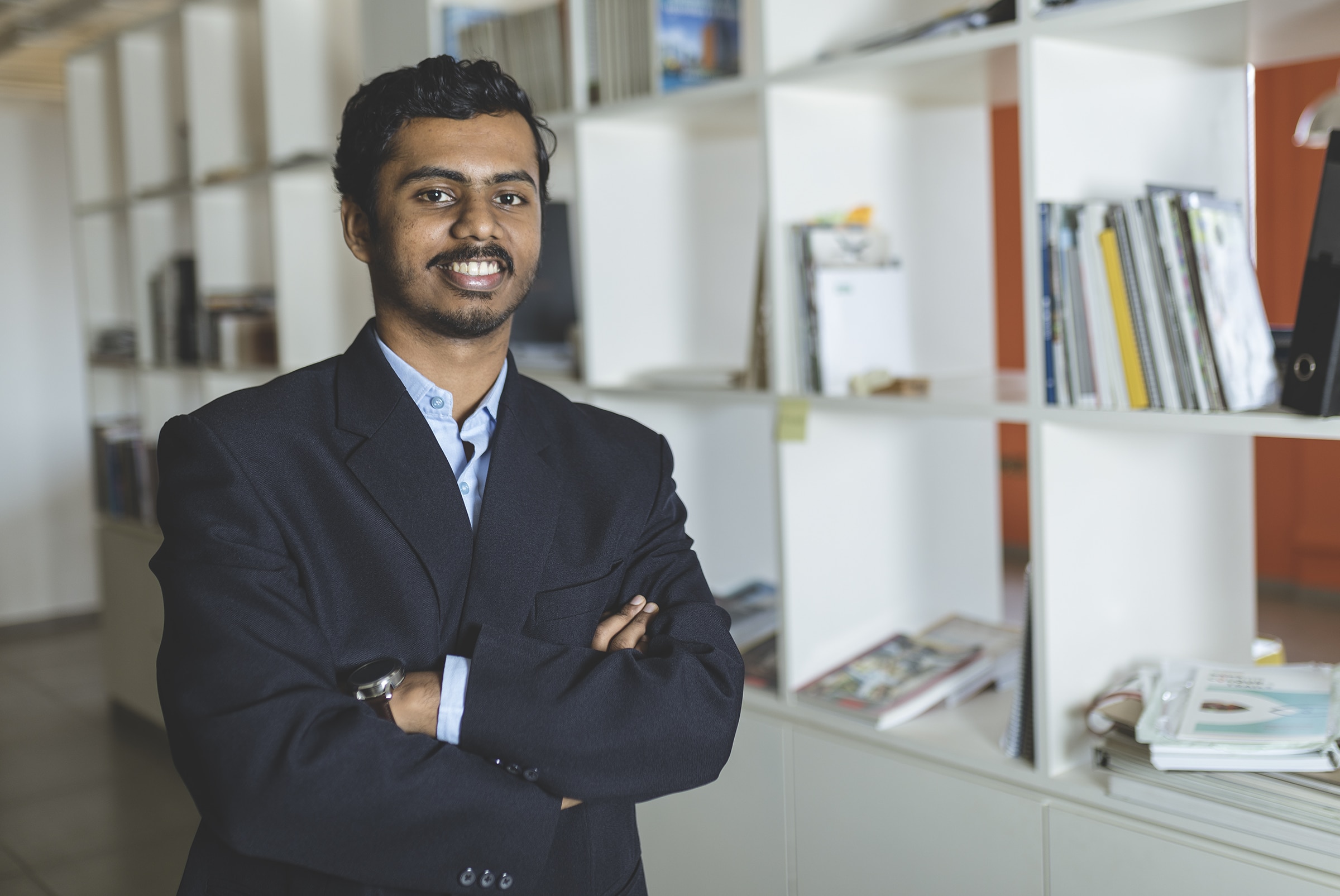
Justin does not talk about nature as scenery. He speaks about it as a system with pressure, memory, and consequence. A landscape architect, urban designer, and scholar, Thomas has built a practice centered on public infrastructure, ecological systems, and civic space design, working across India, China, and the United States. His career spans global architecture firms, municipal authorities, academic institutions, and research driven studios, always operating where environmental performance, public life, and urban resilience intersect.
Over the past decade, Justin has contributed to projects of national and international significance, from healthcare campuses for India’s Ministry of Health and Family Welfare at Perkins Eastman, to municipal infrastructure work for the Brihanmumbai Municipal Corporation, to large scale urban planning and landscape projects in California. Alongside professional practice, he has taught and conducted research at the University of California, Berkeley, and at the Kamla Raheja Vidyanidhi Institute for Architecture and Environmental Studies (KRVIA) in India, focusing on climate risk, environmental justice, and public scholarship. Across these contexts, his focus remains consistent: cities must be designed to work with natural systems rather than against them.
Today, we sit down with him to talk about the roots of his worldview, the projects that have shaped his career, and the ideas he returns to when the work gets complex.
Martha Gutierrez: So let’s start at the beginning. Where and when did you first come into this world, and do you think your country of origin has shaped the way you see the world today?
Justin Thomas: Growing up in the suburbs of Mumbai, the energy of the city was captivating and, in a way, sucked you right into it. The culture of family, community, and neighborhoods shaped how I thought about public open space in and around me. India has a strong culture of outdoor life, and we were outside regardless of harsh weather conditions. Naturally, the city and the environment around me shaped my vision of the world greatly.
MG: When did you decide that this career path was your calling? Was there a particular moment or experience that influenced that decision?
JT: As silly as it sounds, it was the idea of building cities in video games that subconsciously pulled me toward this career. I could visualize space and what makes it good from a very young age. I was also much more of a visual learner than someone who absorbed knowledge verbally, which made it clear that a creative field would suit me.
Later, during my university years, I saw Mumbai flood year after year during monsoon season. I watched infrastructure fail and open spaces disappear due to development pressure. It became increasingly clear that the only sustainable way forward was to integrate natural systems into urban infrastructure. That realization sparked my interest in landscape architecture and urban design and ultimately led me to where I am today.
MG: What keeps you inspired creatively? What are the driving forces behind your work?
JT: I’ve taught design courses in multiple schools and it’s surprising how many students come up with strong ideas when they’re unburdened by design dogma. I also draw a lot of inspiration from studying good projects and learning from books that teach design thinking. Seeing professionals in the field doing meaningful, thoughtful work motivates me to push myself every single day.
I distinctly remember encountering a project by the late Kongjian Yu, a pioneer of China’s ecological civilization. His work articulated a clear and simple idea: bringing people closer to nature while integrating natural systems into urban infrastructure. He believed cities could act like sponges, using landscapes to catch and store water. Watching Mumbai struggle with flooding year after year made me question whether our approach to water was fundamentally flawed. Maybe instead of fighting it, we need to design cities that accommodate it. That idea has influenced my work ever since.
MG: Can you take us behind the scenes of your creative process? How do you turn ideas into built reality?
JT: I believe the easiest way to articulate ideas is through sketching and writing thoughts down. There’s a lot of sketching involved at the beginning, which naturally evolves into diagrams. Once all the factors that influence or constrain a project are considered, the initial diagram changes significantly.
After several iterations, the work moves into computer modeling. Often, the model doesn’t look as good as the sketch, and that’s when we go back to the drawing board. Design isn’t a linear process. It’s a constant back and forth between ideas, constraints, and refinement.
MG: Is there a particular mission or message you hope to communicate through your work?
JT: The message itself isn’t new, but it’s something I try to keep present every day. We share this planet with many other species, and we need to be mindful of that. Climate change disproportionately affects vulnerable communities, coastal regions, and poorer populations. We’re seeing rising sea levels, flash floods, and extreme climate events across the world.
What fuels my career is the belief that if we genuinely care about the planet, we have a responsibility to protect it. Otherwise, we won’t be able to survive the long-term effects of climate change.
MG: Looking back, are there any moments or projects that stand out as particularly meaningful to you?
JT: I’m especially drawn to spaces that communities and everyday people can truly use. One project I worked on reimagined climate infrastructure as a public park within a 500-acre watershed that frequently experienced stormwater flooding. Our goal was to allow water into the site strategically while still maintaining the park’s usability.
Another meaningful moment was an exhibition in Mumbai that I was part of as an independent collaborator. The project initiated a new discussion around public sanitation infrastructure in India. Sanitation is often treated as a purely engineering problem, isolated from public life. This exhibition proposed a more holistic design framework that considered technology, recycling systems, construction methods, affordability, maintenance, and long-term operational costs. The exhibition traveled across multiple cities, and several proposals were later approved by state governments for construction.
MG: Are there any current or upcoming projects you’re particularly excited about?
JT: Yes. We’re about to begin a support campus master plan with San Francisco International Airport. It’s an interesting challenge because airports operate under intense security and regulatory constraints, yet there’s a real intention to make the campus welcoming and environmentally responsive.
There are many stakeholders involved, each with their own priorities, which makes designing a space that accommodates everyone’s needs especially complex. That complexity is precisely what makes the project exciting. Top it off with the ever present issue of rising sea levels and groundwater table, raises the difficulty level of designing a campus on top of unstable bay mud several notches higher.
MG: What has been one of the biggest challenges you’ve faced in your career?
JT: One recurring challenge is convincing clients and stakeholders of the intangible yet very real value of how good design can be beneficial for everyone over the long term. Design opinions are often subjective, and public projects involve many voices. While I acknowledge that inclusivity is important, incorporating feedback within tight constraints and limited budgets can be extremely challenging sometimes.
MG: Finally, what advice would you give to emerging professionals entering your field?
JT: I don’t believe there’s a fixed blueprint for success in this field. Everyone defines success differently, and I respect that. What I do believe is non-negotiable in any discipline is sincerity and belief in the work you do. Without that, it’s very difficult to sustain a meaningful practice.