











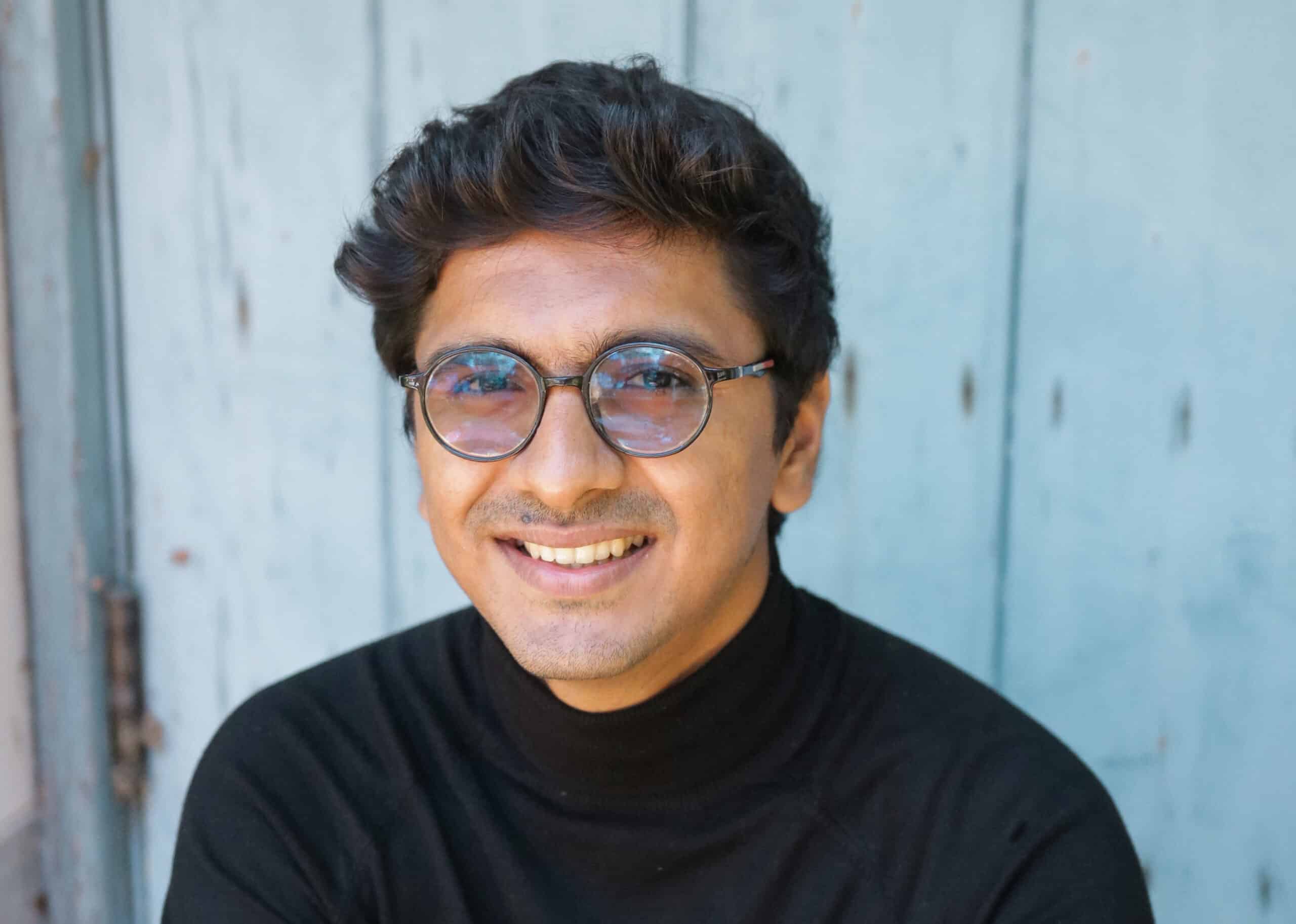
From the dense, adaptive streets of Mumbai to the rapidly evolving urban landscapes of Taiwan, and into the large-scale frameworks of cities across the United States, architect and urban designer Alay Thakrar has shaped a practice grounded in observation, systems thinking, and a quiet commitment to people-first design. Currently working at Perkins&Will, his portfolio moves across some of the most ambitious planning efforts in the country, from the Grand Park District Master Plan in Westfield, Indiana, to the transformation of Cincinnati’s riverfront through The Banks Urban Design Plan to the expansion of the Kay Bailey Hutchison Convention Center in Dallas. Among the projects he has contributed to, the planning of Baton Rouge’s 12-mile Florida Corridor has been recognized by the American Planning Association, pointing to its wider resonance within contemporary urban development.
His work unfolds across institutional, civic, and innovation-driven environments, from campus master plans for universities such as Texas A&M University-Central Texas and the University of North Dakota to large-scale strategies such as the TAMUS Easterwood Airport Strategic Development Plan and the Mayo Clinic Discovery Coast in Jacksonville. Across these varied contexts, a consistent thread emerges: a sustained interest in how infrastructure, public space, and policy converge to shape everyday life. This approach is reflected in projects such as the Michigan State University Crescent Road Innovation Community, recognized with the 2025 Award of Excellence in Innovation by the Association of University Research Parks, and the Austin Equitable Transit Oriented Development Strategy, which received the 2024 Award of Excellence in Equity, Diversity, and Inclusion from the Council on Tall Buildings and Urban Habitat.
Before his work in the United States, Thakrar’s experience across India and Taiwan, working with studios such as LABwerk, Little River Architects, and JJP Architects & Planners, instilled a sensitivity to material, spatial, and cultural context. His early work ranges from residential and civic projects like the 7 Courtyards House and the Jay Prabha Medanta Super Specialty Hospital in India to contributions on major public infrastructure such as the Taoyuan Metro Green Line in Taiwan.
Thakrar’s perspective is shaped as much by lived urban experience as by professional practice. In this conversation, he reflects on the environments that informed him, the systems that guide his work, and the evolving role of design in addressing the realities of contemporary cities.
So, let’s kick it off with where and when you first came into this world. Do you think your country of origin has in any way shaped your vision of the world?
I was born in Gujarat, in western India, but grew up in Mumbai, what people like to call the “city of dreams.” And it really is that, but not in a glossy, romanticized way. It’s a city built on ambition, constant movement, and a lot of struggle.
Almost everyone there is from somewhere else. My parents were part of that story too. They worked incredibly hard to build a life, and because of that, I grew up with a level of comfort that wasn’t always easy for them to achieve. So even before I fully understood it, I was living inside that layered reality of aspiration and resilience.
Mumbai shaped how I see the world. It’s dense, constantly negotiating limited space, and yet life adapts. People use everything to its maximum potential, often beyond what it was designed for. Spaces become layered and shared. An alley becomes a cricket pitch, a courtyard becomes a living room for an entire neighborhood. Streets shift between markets, transit corridors, and social spaces throughout the day. There’s a quiet intelligence in how the city works.
Growing up there made me curious about how people shape spaces, and how those spaces shape communities. It made me realize that infrastructure isn’t just functional, it can be deeply human. Mumbai taught me that even within constraints, there’s room for adaptability, overlap, and coexistence, and that idea continues to shape how I think about cities.
Now, when did you decide that a career in your field was your calling? What sparked that decision?
I don’t think there was a single moment. It was more of a slow build that, in hindsight, feels inevitable.
I was already fascinated by the city, trying to understand how everything worked together. But a technical drawing professor in high school helped turn that curiosity into something more concrete. He made construction drawings feel almost magical. Plans and sections weren’t just lines, they became spaces you could imagine and eventually build. Since I was already into sketching, it felt like a natural overlap between creativity and logic.
Urban design came later, and in a much more intense way. During my undergraduate studies, I worked on a project in Mahul, a neighborhood in Mumbai surrounded by heavy industry where thousands of people had been relocated. Spending time there changed everything. It stopped being academic and became about understanding how planning decisions affect real lives.
What stayed with me was that our work contributed, in a small way, to a larger legal case that eventually led to residents being relocated. That experience made it impossible to ignore how uneven these systems can be, and how design sits within social, political, and environmental realities. Architecture got me interested in spaces, but urban design made me question who those spaces are really for, and who gets left out.
What lights the spark for your creativity?
A lot of it comes from simply observing how people interact with space. Not in a deliberate way all the time, but just noticing small, everyday moments, how someone claims a corner of a street, how a space gets shared between different activities, or how people adapt something that wasn’t designed for them. Those moments feel incredibly creative.
That way of seeing comes from Mumbai, where everything overlaps. Spaces aren’t rigid, they’re negotiated. The most interesting environments are often the ones that allow multiple uses and different people to coexist.
At the same time, traveling has been a big influence. Every city is solving similar problems, but in completely different ways. Seeing those variations expands how you think. Spending time in Taipei, for example, shifted my perspective. I came across work that was quiet but extremely thoughtful in how it responded to context. It made me realize that design doesn’t have to be loud to be impactful.
Jan Gehl’s work also stayed with me. His focus on public life reinforced something simple but often overlooked, that human experience should always be at the center of design.
How do you bring your ideas to life?
For me, every project starts with understanding that no two places are the same. My process usually falls into three phases: discover, design, and narrate, though it’s never strictly linear.
The discovery phase is about understanding the place and its people. Through observation, interviews, and tools like GIS or data analysis, I try to build a deeper sense of how a place actually works. It’s not just about gathering information, it’s about developing empathy.
The design phase is more fluid. I start with quick sketches and test ideas freely, then gradually move into more structured tools like CAD and 3D models. There’s constant back-and-forth, refining and adjusting as new insights emerge.
The narrative phase is where everything comes together. Even strong ideas don’t work unless people understand them. So a big part of the process is translating design into drawings, diagrams, and visualizations that stakeholders and communities can connect with.
It’s less about forcing an idea into reality and more about shaping it so it belongs to the place it’s created for.
Is there a mission or purpose that fuels your work?
My work is centered on community, especially how the public realm shapes everyday life in ways we don’t always notice. I’m interested in what makes a place feel meaningful, something that isn’t always measurable, but you feel it when it’s there or when it’s missing.
Communities anchor themselves in places that offer something familiar or worth holding onto. Design has a role in strengthening that relationship while still allowing for change. The challenge is creating spaces that are rooted in identity but flexible enough to evolve.
Cities are shaped by many forces, designers, engineers, policymakers, and residents. When those voices aren’t aligned, the results show. But when they are, even small interventions can have real impact. Being part of that process is what keeps me going.
Looking back, what’s been a standout moment in your career?
Working on the Florida Corridor in Baton Rouge was a defining experience. It’s a 12-mile stretch that has long divided communities along social and economic lines.
The goal was to reimagine it as a connector rather than a barrier. What made it meaningful was how grounded it was in real conditions, limited connectivity, lack of walkability, and long-standing inequities. These weren’t abstract issues, they shaped everyday life.
The process was also highly collaborative, involving thousands of residents and a wide range of stakeholders. The project was eventually approved, which was a major milestone, but what stayed with me was the nature of the work itself, trying to respond to a complex urban condition in a way that felt responsible and honest.
Do you have any projects you’re excited about right now?
Several projects I’m working on explore similar ideas at different scales.
The Banks in Cincinnati is about shifting a riverfront district from an event-based destination into something more continuous and livable. It’s about creating a place that works both during large events and on an ordinary day.
I’m also involved with ULI Austin’s Transit-Oriented Development Local Member Council which focuses on how mobility systems and land use can reinforce each other. It’s less about producing a single design and more about engaging with different perspectives.
At an architectural scale, the Kay Bailey Hutchison Convention Center expansion in Dallas is about rethinking how a large, inward-facing building connects to the city. It’s not just a building project, it’s about stitching together different parts of the urban fabric.
Across all of them, what excites me is the opportunity to make systems more connected and more human.
What advice would you give to aspiring creatives in your field?
Stay curious beyond design. Cities are shaped by culture, economics, governance, and the more you understand those, the more grounded your work becomes.
Learn to observe how people actually use spaces. Those small cues often tell you more than drawings ever can.
Step outside the usual path whenever you can. Some of the most defining experiences come from things outside your core work.
Communication is just as important as design. If you can’t explain your ideas clearly, they lose impact.
And most importantly, be patient. This is a field where your judgment develops over time. A lot of meaningful work happens at a quieter scale, and recognizing that changes how you approach design.