

















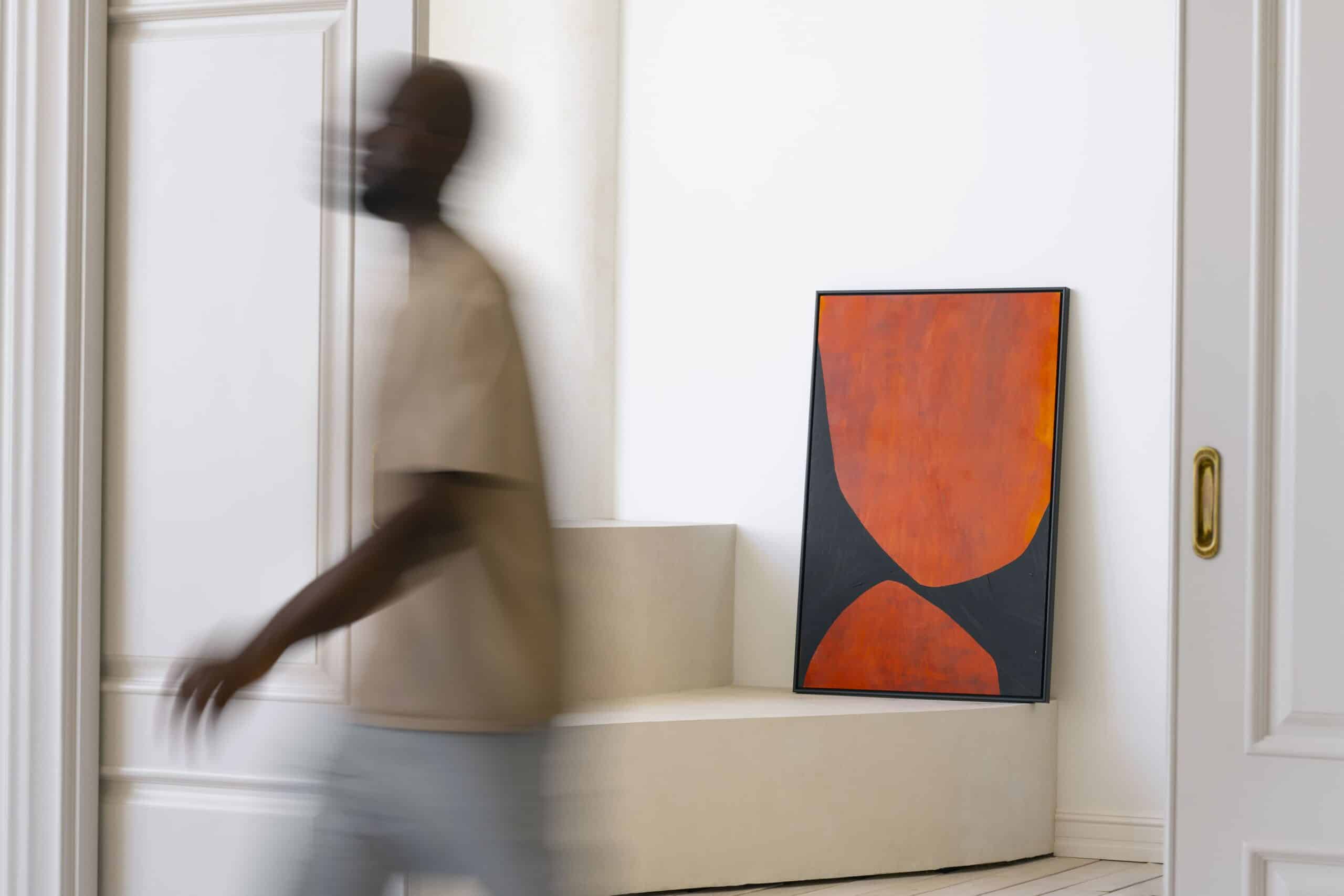
For a long time, the easiest way to signal taste in a home was through furniture — a well-known designer piece, a statement sofa, something a guest would recognize and clock immediately. That’s shifting. Walk into the kind of home that reads as genuinely curated rather than just expensively furnished, and increasingly the thing that actually tells you something about the person who lives there isn’t the couch. It’s what’s on the walls.
That’s a meaningful change, and it’s worth understanding why it’s happening, because it reflects something broader about how status signaling itself has quietly evolved.
The old signal stopped working
Recognizable luxury furniture has an obvious problem as a status symbol: it’s recognizable. Once something is easy to identify and easy to buy if you have the budget, it stops being a signal of taste and starts being a signal of spend — which are not the same thing, and increasingly, people who actually care about the distinction know it. A designer chair says “I can afford this.” It doesn’t say much else. Anyone with the same budget can buy the identical piece and get the identical signal.
Art has always worked differently, because art — unlike furniture — is legible as a reflection of the person choosing it rather than just their bank account. A wall of curated, personal, well-chosen pieces says something a furniture receipt never could: that someone actually has a point of view, and cared enough to build a space around it rather than furnish it from a single catalog. That’s a harder thing to fake, and a much more interesting thing to signal — which is exactly why it’s become the more sophisticated version of the same underlying instinct.
What changed to make this accessible
The interesting twist is that this shift toward “curated over expensive” has been enabled by something almost unglamorous: print-on-demand technology finally getting good enough that custom, gallery-quality wall art stopped requiring a custom framing shop and a four-figure budget.
A few years ago, the honest options for filling a wall were limited: mass-produced prints that everyone recognized from the same big-box store, or genuinely custom framing that was slow and expensive enough to be out of reach for most people decorating an entire home. What’s changed is that specialist print-on-demand suppliers — companies built specifically around wall art rather than treating it as one product among fifty — have made the middle option real: a piece that’s actually yours, produced at a quality that holds up next to something from an actual gallery, without the cost or timeline of traditional custom framing.
One example is a print-on-demand company built exclusively around wall art since 2012, offering archival-quality canvas, framed prints, and metal prints across a range most furniture-first decorators never think to look into — the kind of infrastructure that’s quietly made “curate your own gallery wall” a realistic weekend project instead of an aspirational Pinterest board that never gets executed.
Curation is the actual flex
What makes this a genuine status shift rather than just a decor trend is what it demands of the person doing it. Buying an expensive, recognizable piece of furniture requires money and not much else. Building a wall of art that actually says something about you requires taste, patience, and a willingness to be specific — to choose pieces that mean something rather than pieces that are simply impressive. That’s a much harder thing to shortcut, which is exactly what makes it a better signal.
It also rewards restraint in a way furniture-driven status never did. The homes that get this right aren’t the ones with the most expensive individual pieces — they’re the ones where everything on the wall clearly got chosen on purpose, where a guest can look at the arrangement and get a genuine sense of who lives there instead of just what they could afford. That’s a different kind of impressive, and it’s a much harder one to buy your way into directly.Why this holds up better than most decor trends
Most shifts in home design fade because they’re aesthetic rather than structural — a color palette goes out of style, a furniture silhouette starts to feel dated, and the whole look ages out within a few years. The move toward curated, personal wall art is different because it isn’t really about a look at all. A gallery wall built around pieces someone actually cares about doesn’t “go out of style” the way a trend color does, because its value was never about matching a moment — it was about reflecting a person, which doesn’t expire on the same schedule fashion does.
That’s also why it’s worth treating as more than a passing aesthetic preference. The furniture-as-status era rewarded people who could spend the most. This one rewards people who took the time to actually mean something with the space they built — a much harder thing to shortcut, and, for exactly that reason, a much more durable signal of taste than anything that could simply be purchased in a single afternoon.
The takeaway
If status used to be about the biggest, most recognizable purchase in the room, it’s increasingly about the thing that can’t be bought off a shelf in one trip — a wall that took thought, not just budget. The furniture in a well-designed home tells you what someone could afford. What’s on the walls tells you who they are. That’s a much more interesting thing to walk into a room and notice — and it’s a much harder one to fake.