

















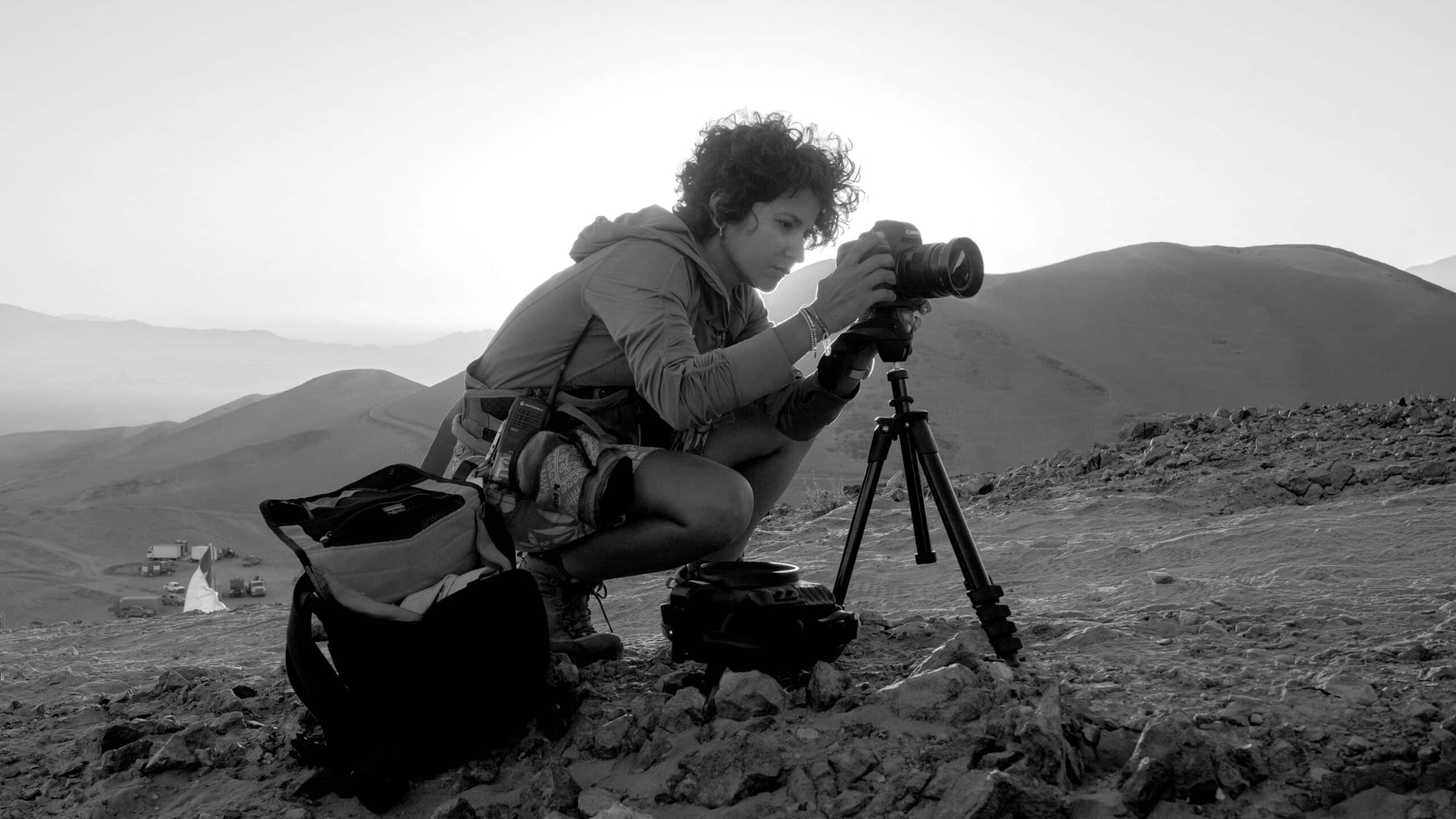
Photography has taken Beatrice Aguirre from the vibrant streets of her hometown of Cali, Colombia, to the demanding creative landscape of Los Angeles. Along the way, she has photographed people from every walk of life, co-founded a Latin American stock photography company dedicated to celebrating authentic regional identities, produced commercial work for clients including Universal Music Group and Verizon, and served as the still photographer on productions such as The 33, The Internationals, and Documentary Now!. Yet speaking with Aguirre, it quickly becomes clear that these impressive accomplishments tell only part of her story.
Raised in a family of artists and artisans, she approaches photography less as a profession than as a way of honoring people, preserving memory, and understanding the world around her. Whether documenting a major film production or creating deeply personal portraits, her work is guided by curiosity, empathy, and a profound appreciation for everyday beauty.
Now, Aguirre reflects on the experiences that have shaped her artistic philosophy, the lessons she has learned throughout her career, and why she believes the most meaningful stories are often hiding in plain sight.
Your work often feels deeply personal. When did you first realize that photography was the language through which you wanted to tell stories?
I grew up surrounded by creativity. My family, especially on my mother’s side, was full of artists and artisans, so making things always felt natural to me. As a teenager I worked with my aunt, who is a visual artist and commercial illustrator, helping paint portions of her commissions. That experience taught me that creativity wasn’t just inspiration. It was discipline, responsibility, and service.
Later, while studying Graphic Design, I discovered photography and immediately felt that I had found my language. Design gave me structure, composition, and visual thinking, but photography allowed me to connect with people and preserve moments in a way that felt incredibly meaningful.
You often speak about beauty, but not in the conventional sense. How would you define beauty today?
Beauty has become something very personal to me. I don’t necessarily find it in perfect places or extraordinary events. I find it in a smile, a gesture, the way light enters a room, or the way someone cares for another person without expecting recognition.
I think beauty surrounds us constantly, but we move so quickly that we often fail to notice it. Photography has taught me to slow down and pay attention.
Your upbringing in Colombia seems to remain a strong influence. How has distance changed your relationship with your homeland?
Growing up in Cali gave me an appreciation for nature, color, music, and human connection. Those memories remain with me every day.
Living abroad has actually strengthened that appreciation. Every new country, language, and culture has expanded my perspective while also reminding me where I come from. I think empathy grows every time we step outside our own world, and that has certainly happened in my life.
One of the defining moments of your career was serving as the still photographer on The 33. What stays with you most from that experience?
People often imagine the glamour of working on a Hollywood production, but what I remember most is the responsibility.
The technical conditions were extremely demanding. We photographed inside a mine with almost no light and later in the Atacama Desert under intense sunlight. Everything had to be prepared before each scene because once filming began, there was no opportunity to make adjustments.
Looking back, I don’t feel proud because it was a Hollywood film. I feel proud because I know how difficult those photographs were to create. That experience taught me that preparation, discipline, and remaining calm under pressure make extraordinary things possible.
Your creative process seems to begin long before you ever press the shutter. What does that process look like?
It begins with listening.
I like to understand the people, the story, or the environment before creating anything. I research because I want to approach every project with curiosity and respect.
But I’ve also learned something important over the years: inspiration doesn’t arrive before I begin working. It appears while I’m creating. Once I start, ideas begin to flow naturally.
You have described photography as an act of service. Could you explain what you mean by that?
Whenever someone trusts me with their story, I feel a great sense of responsibility.
Whether it’s a family portrait, a commercial assignment, or an artistic project, someone is allowing me to preserve something meaningful in their life. Knowing that what I create will remain with them long after our work together is finished gives my career a deep sense of purpose.
Creating images is one of the ways I express love.
You’ve spoken openly about rebuilding your career after moving to the United States. What did that experience teach you?
Starting over was one of the greatest challenges of my life.
I had already built a career in Colombia, but moving meant learning a new language, understanding another culture, and rebuilding every professional relationship from the beginning.
At first that was intimidating, but eventually I stopped comparing my new life to the one I had left behind. Instead, I learned to enjoy the process of building something new. That change in perspective made all the difference.
You’re currently expanding into documentary filmmaking. What draws you to that medium?
I’ve always loved stories.
Right now I’m producing a documentary series about the invisible care behind everyday work. Every profession involves dedication, craftsmanship, and love that often goes unnoticed, yet those quiet acts are what sustain our daily lives.
The documentary format allows me to explore those stories in greater depth while staying true to the values that have always guided my photography.
Finally, what do you hope people feel when they look at your work?
More than anything, I hope they slow down.
I hope they notice something they hadn’t seen before. I hope they recognize the beauty in ordinary life and remember that every person has a story worth preserving.
If my photographs encourage someone to look at the world with a little more gratitude, curiosity, or compassion, then I feel I have accomplished something meaningful.